01 — CREATIVE SHOWCASE · VISUAL DEVELOPMENT · 2020
Diverse Creative Studies
A technical showcase demonstrating design range across marine engineering, heavy robotics, narrative costumes, and creature anatomy.
A visual development portfolio demonstrating technical range across marine engineering, heavy mechs, costume design, and creature anatomy—anchored in orthographic precision, silhouette readability, and production-ready drafting.
ROLE
Concept Artist & Illustrator
YEAR & STATUT
2020 · Foundational Design Range
PROJECT TYPE
Self-Directed Visual Development
DISCIPLINES
Hard-Surface · Mecha · Characters · Creatures
02 — CORE DIRECTIVE
“How do you prove broad creative range across conflicting genres — from deep-sea submersibles to mechas, fantasy hunters, and prehistoric beasts — without the portfolio reading as scattered?”
Functional Engineering Across Genres
Every concept is anchored in structural physics, functional joint articulation, and ergonomic plausibility.
Silhouette Readability First
Resolving pure 2D silhouettes before detailing ensures immediate character recognition across all gameplay camera angles.
Iterative Progression in the Open
Multi-pass iterations and cross-section schematics validate methodical decisions from concept to production-ready asset.
03 — TECHNICAL PIPELINE & TOOLS
Software & Digital Craft
A hybrid 2D/3D pipeline marrying rapid lineart schematics with volumetric sculpting and realistic PBR materials.
Photoshop / Digital Painting
Orthographic Schematics · Costume Iterations · Foliage Camouflage · Material Shading Passes
ZBrush / Sculpting & Volumes
Creature Musculature · Cybernetic Cranial Sculpting · Hard-Surface Armor Volumes

Blender / Mechanical Validation
Submersible Hull Topology · Hydraulic Arm Articulation · Cockpit Ergonomics & Scale
Substance 3D / Material Response
High-Pressure Enamels · Weathered Leather & Scales · Optical Polymer Shading

04 — CHAPTER I: SUBMERSIBLE & INDUSTRIAL DESIGN
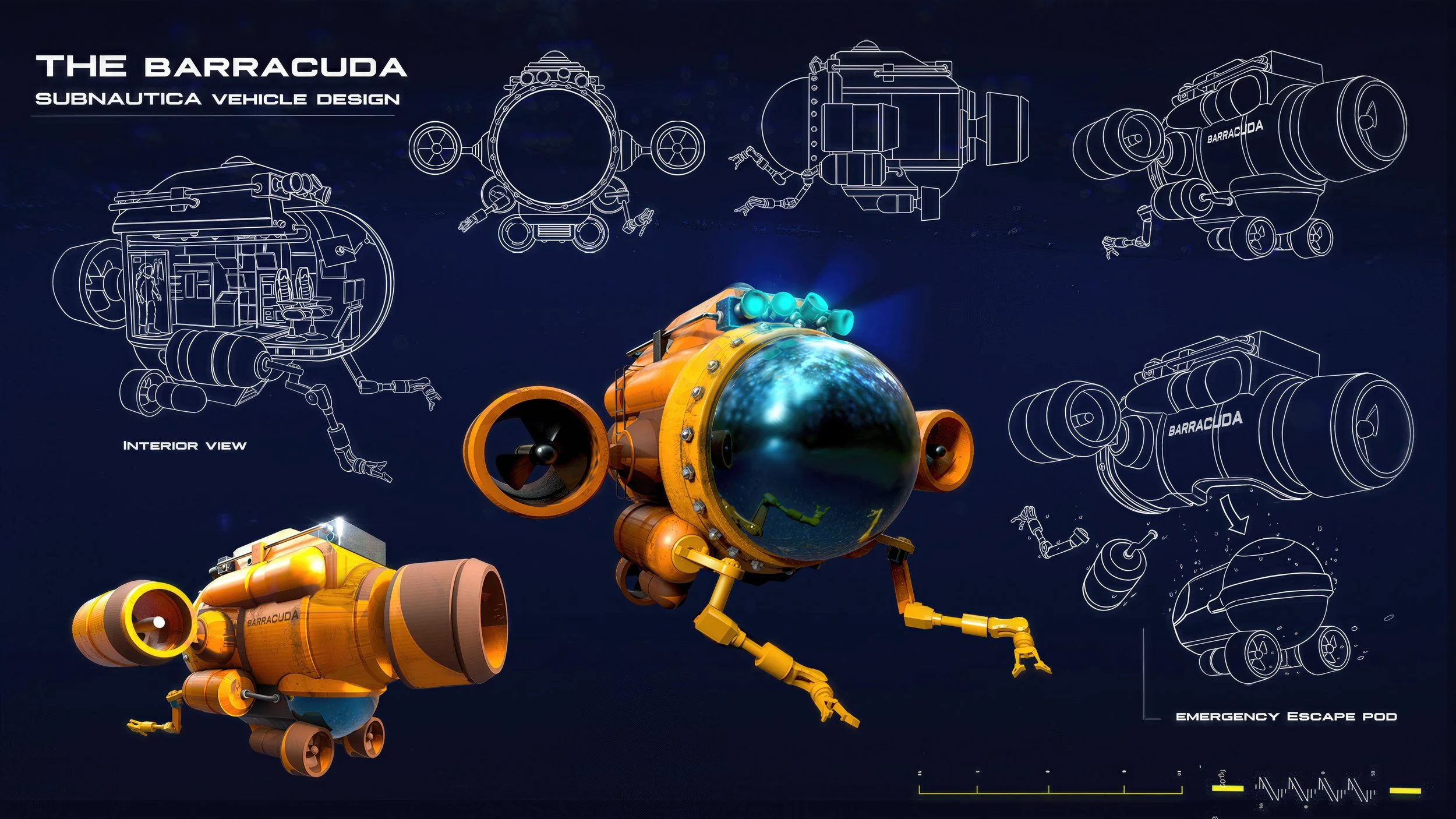
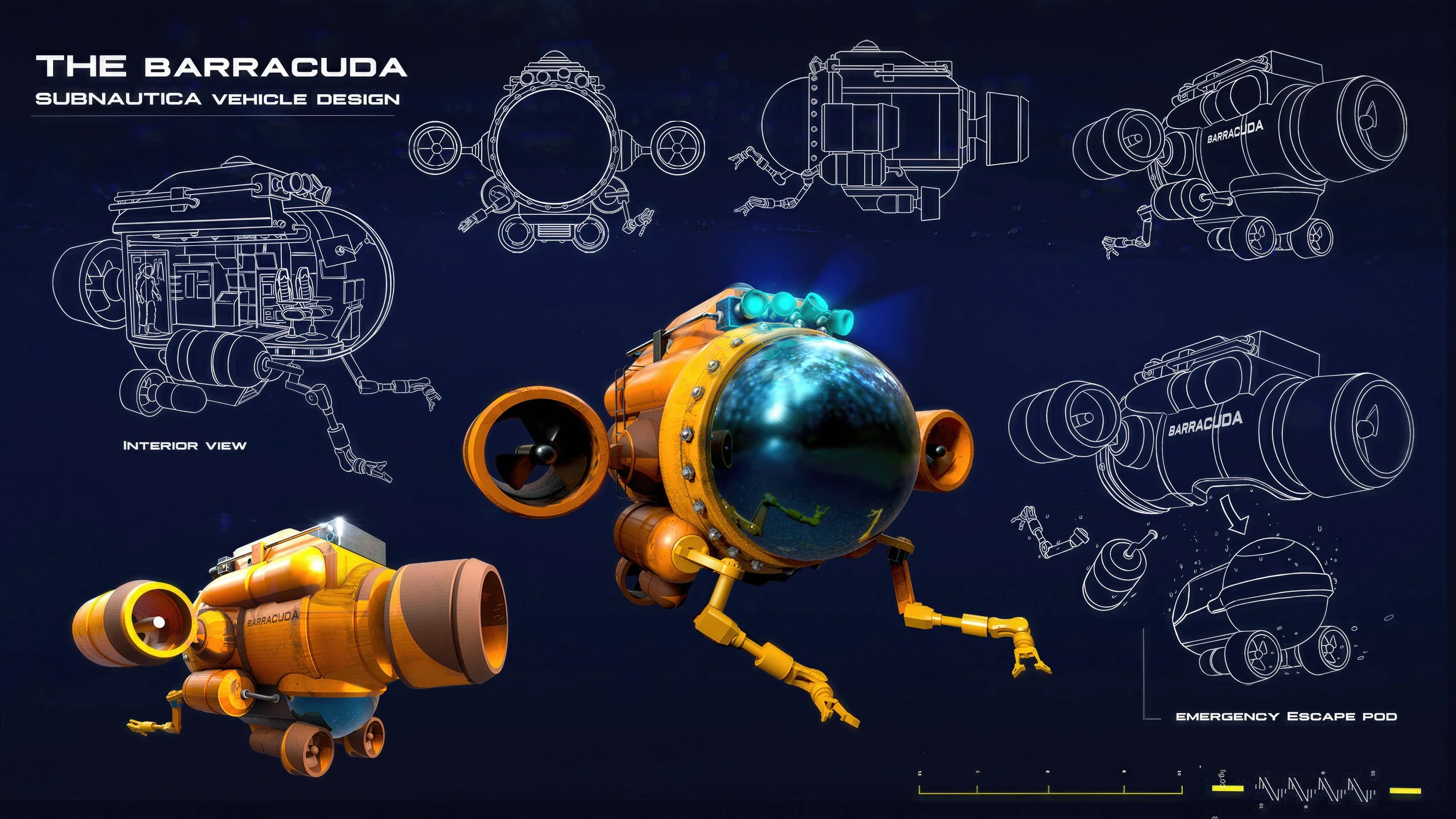
The Barracuda — Subnautica-Class Submersible
Deep-sea exploration vessel engineered with spherical pressure hulls, vector thrusters, hydraulic claws, and an emergency escape pod.
05 — CHAPTER II: HEAVY ROBOTICS & CYBERNETIC CHASSIS
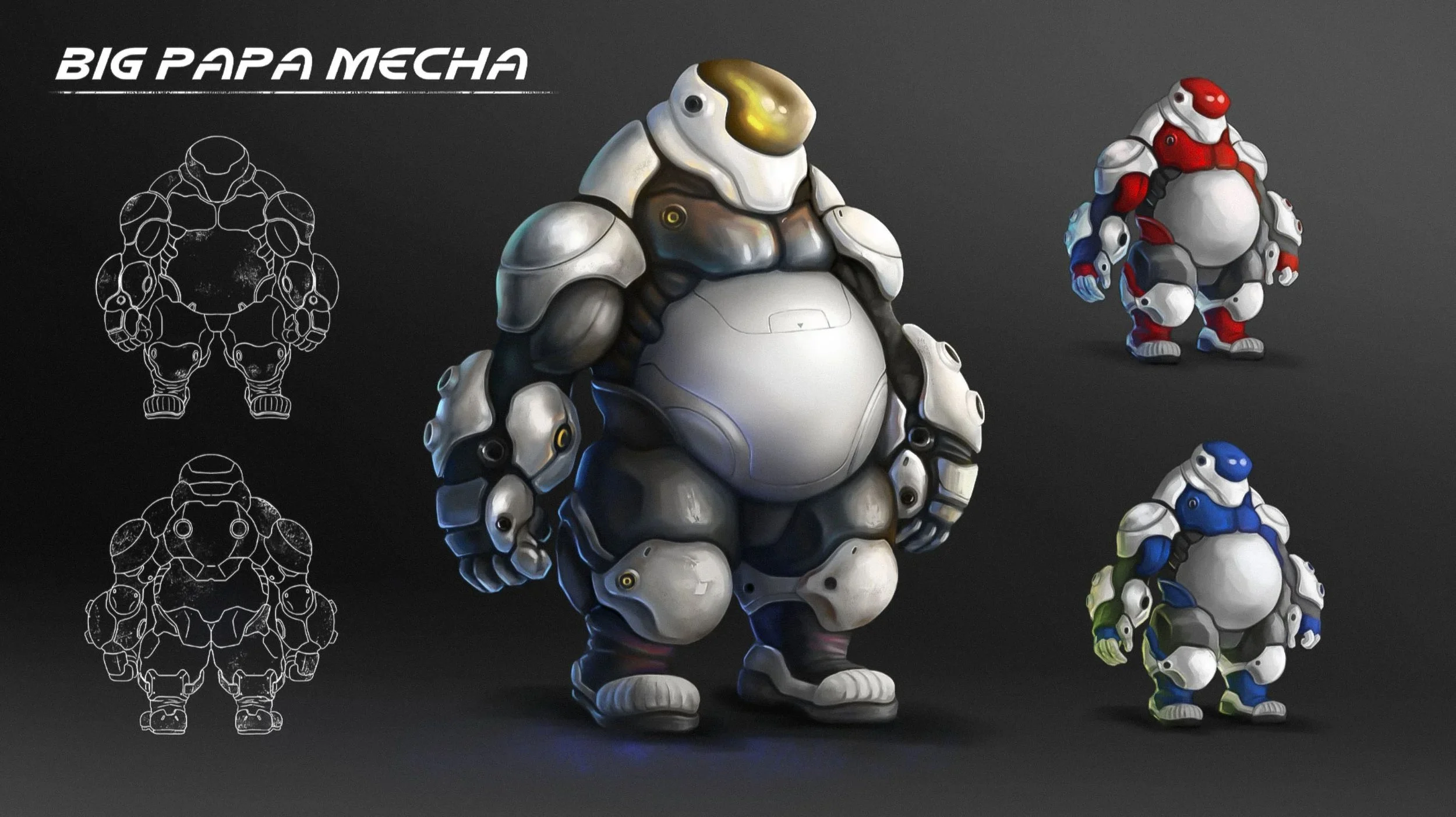
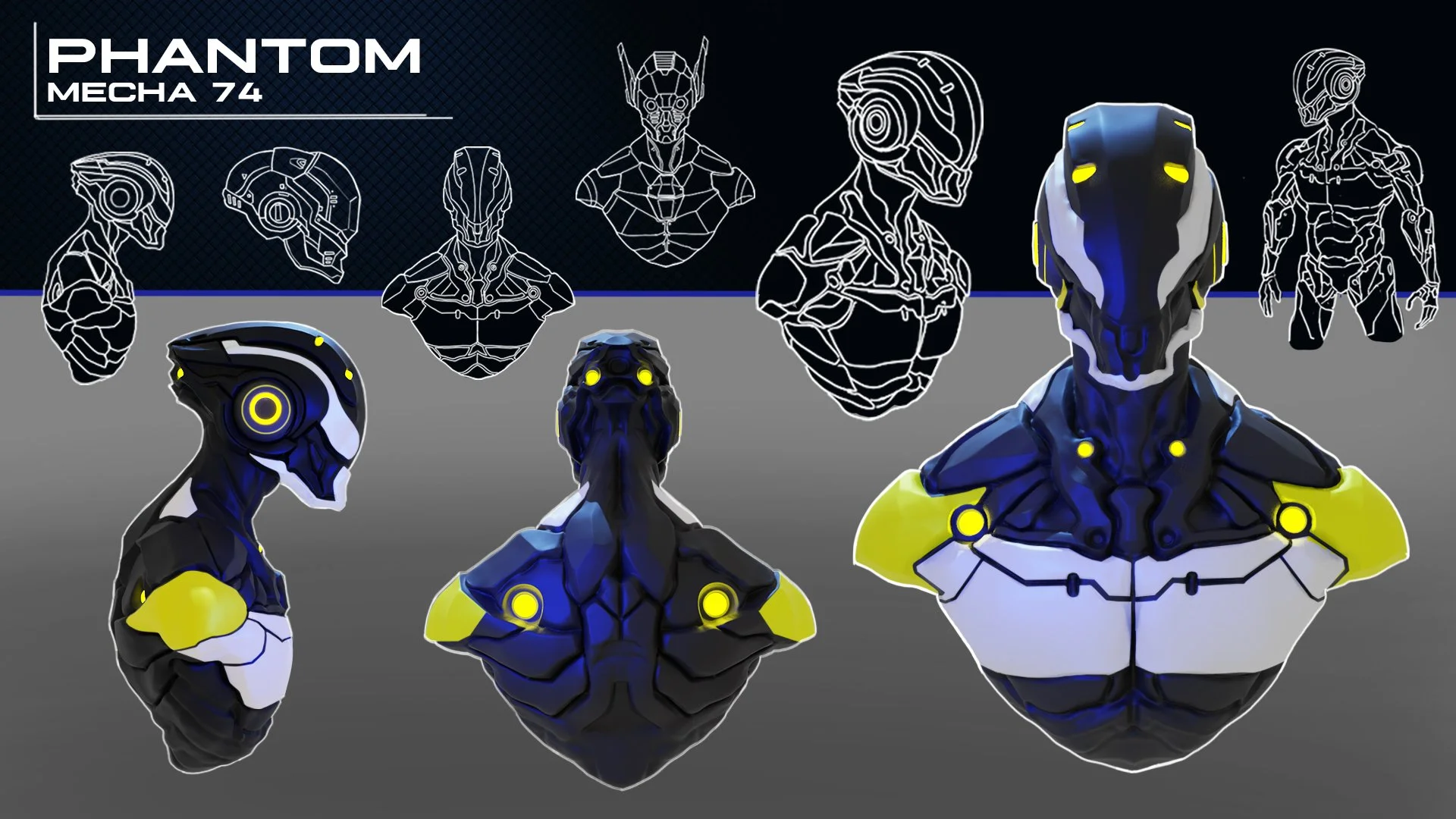
Big Papa & Phantom Mecha 74
Contrasting two robotics paradigms: an industrial spherical heavy mech with modular liveries alongside an agile cybernetic stealth torso.
06 — CHAPTER III: NARRATIVE CHARACTER ITERATION
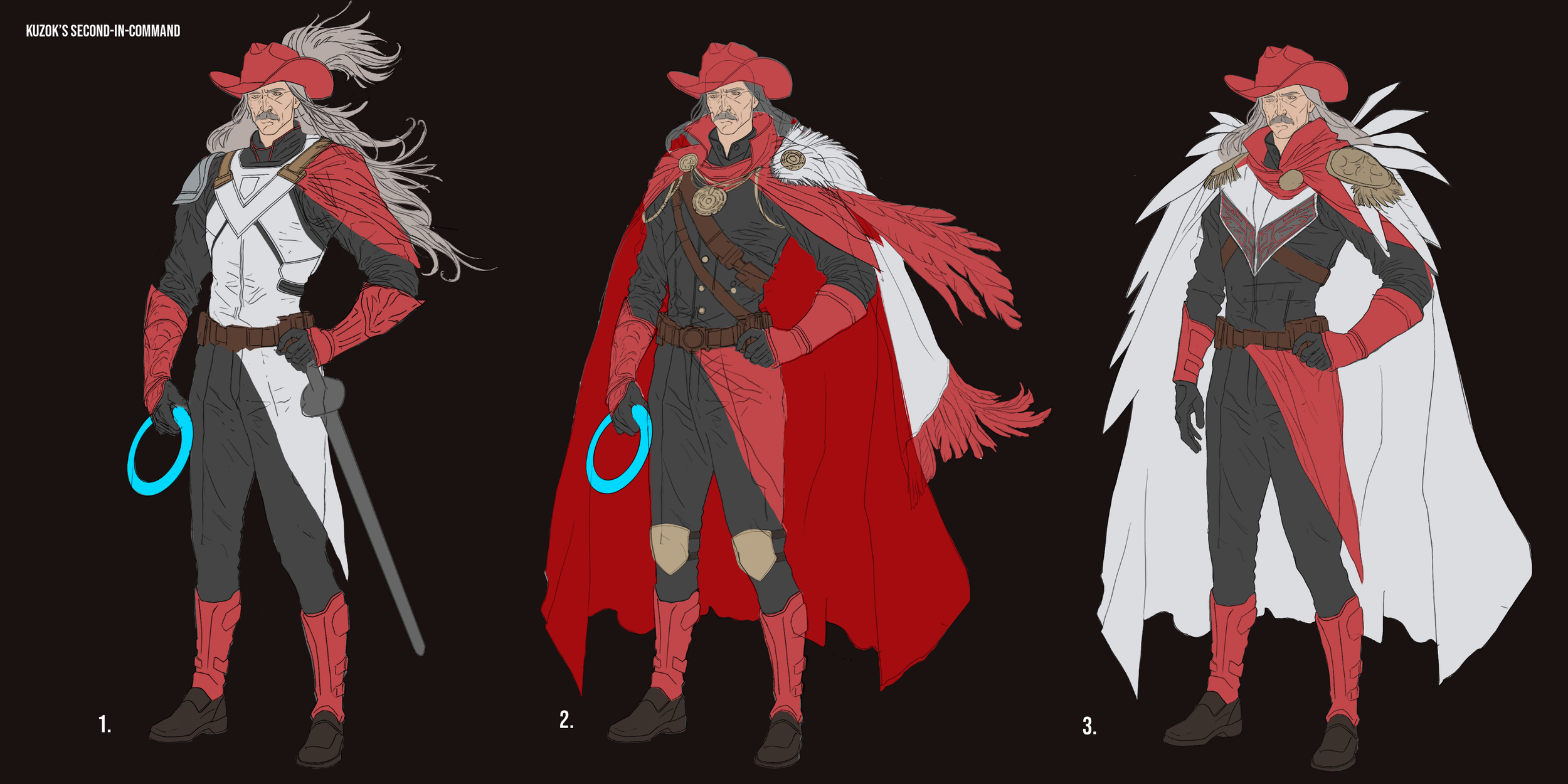
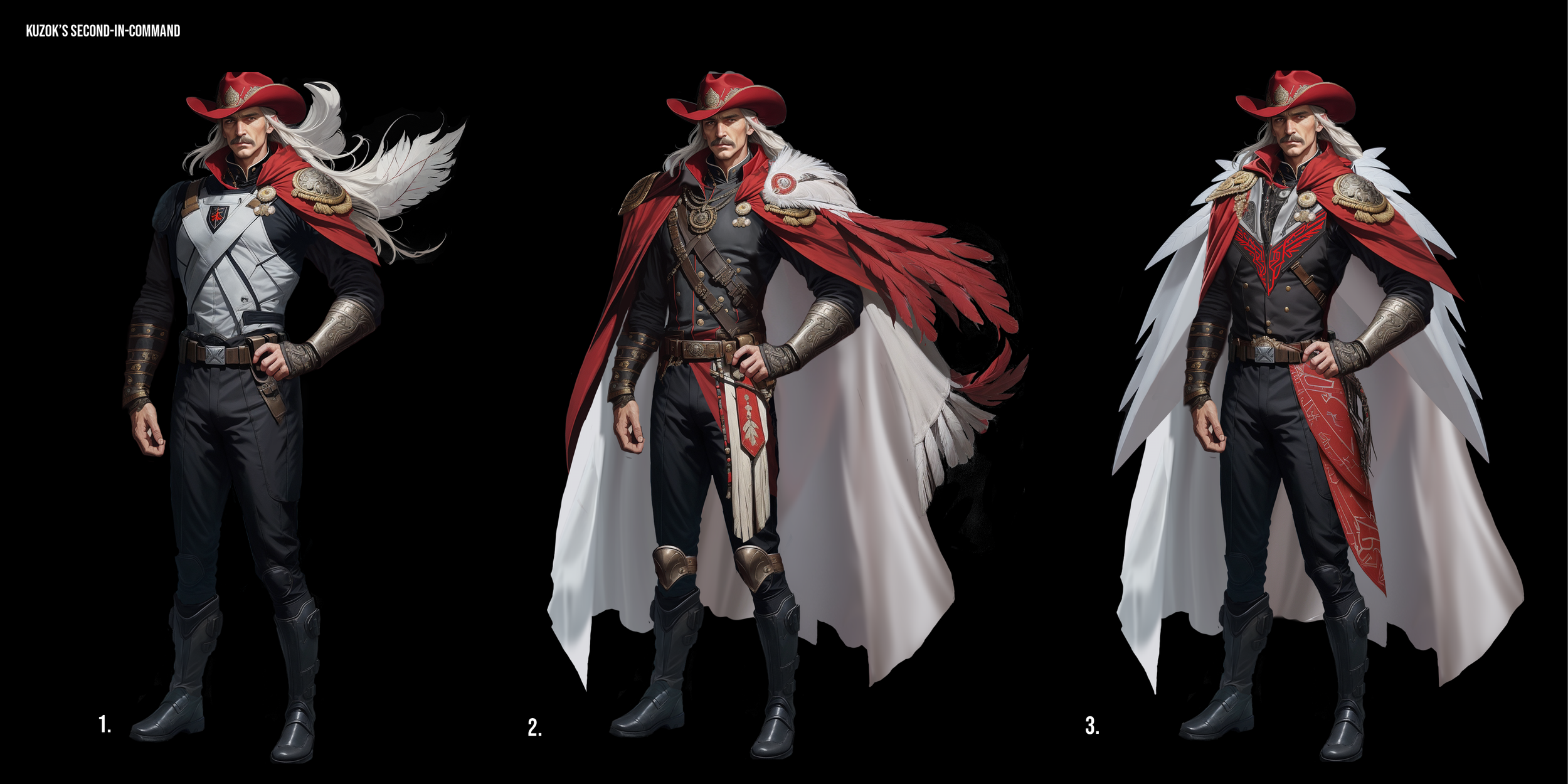
Kuzok’s Second-in-Command — Uniform Evolution
Iterative costume design exploring hierarchy, silhouette authority, and functional regalia across three tactical stages and a painterly finish.
07 — CHAPTER IV: FANTASY CHARACTER & CAMOUFLAGE
Oghiga Vaziazrar — Dark Elf Huntress
Organic character study exploring biological camouflage, autumn foliage mantle, ritual bone headdress, and low-profile hunting stances.
%2Bcopy%2B5.webp)
08 — CHAPTER V: CREATURE ANATOMY & MOUNT UTILITY
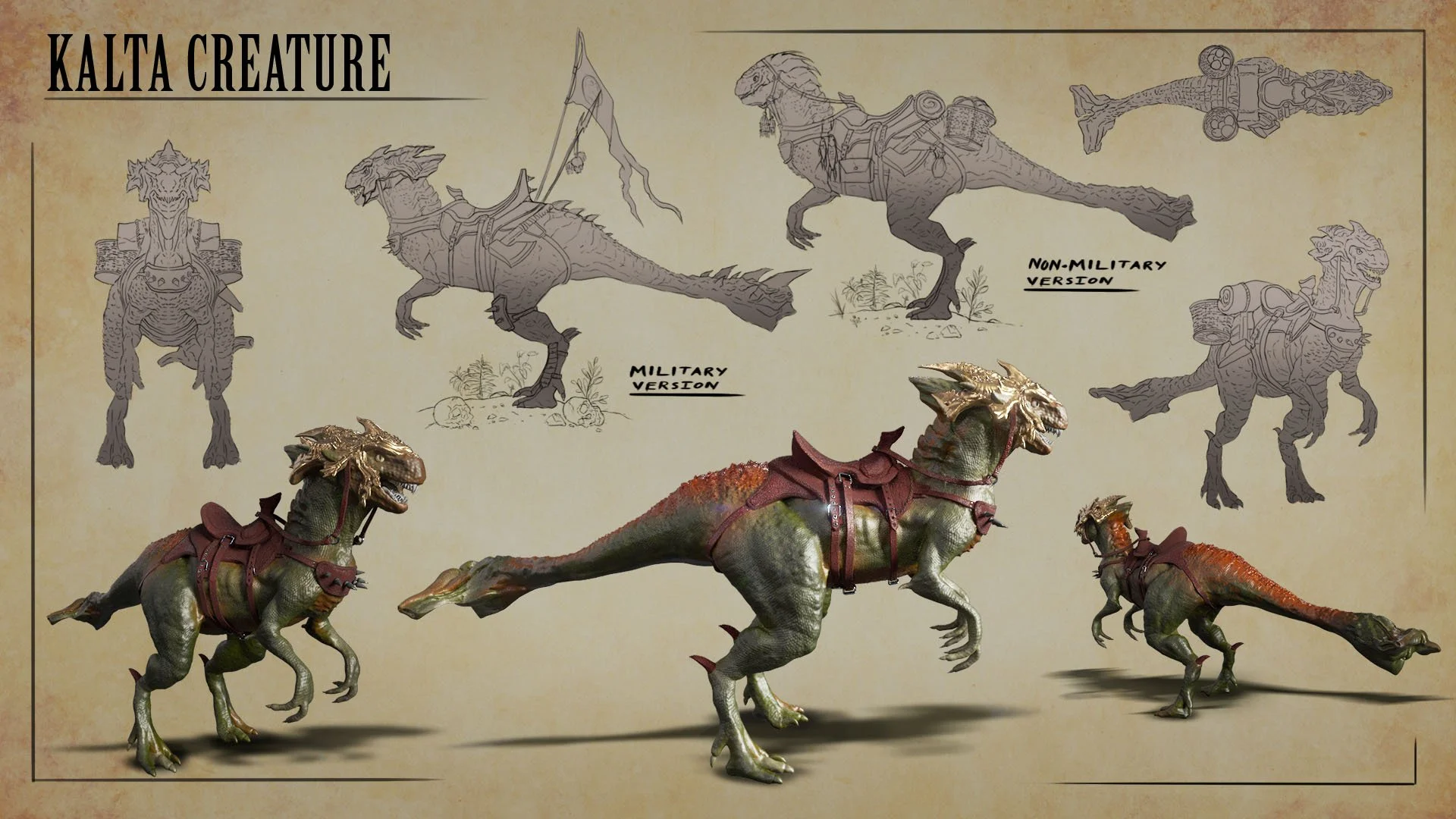
The Kalta Beast — Prehistoric War & Pack Mount
Predatory bipedal dynamics engineered for utilitarian pack utility, military harness configurations, and 3D turntable muscle mass studies.
09 — DESIGN DISCIPLINE
The Four-Phase Production Protocol
To ensure that a collection spanning vehicles, heavy robots, humanoid characters, and creatures remains visually coherent, every asset passes through the exact same four-step production gate.
PHASE 01
Silhouette Grammar
Pure black/white thumbnail passes testing whether the unit reads instantly from afar before a single highlight or seam is drawn.
PHASE 02
Functional Logic
Orthographic blueprints establishing hydraulic clearances, pressurized hatch access, saddle rigging straps, and weapon hardpoints.
PHASE 03
Material Differentiation
Establishing distinct specular and roughness behaviors between marine titanium, weathered skin, plumage, and optical polymer domes.
PHASE 04
Modular Variants
Testing practical uniform colorways, safety vs. stealth liveries, and military vs. pack configurations for gameplay modularity.
10 — PRODUCTION OUTCOME
Design Breadth Across Five Core Domains
A rigorous showcase demonstrating that core design fundamentals — anatomy, perspective, mechanical logic, and material rendering — apply universally across any production mandate.
5
DOMAINS COVERED
Submersibles, Mechs, Costumes, Camouflage, Creatures
100%
ORTHOGRAPHIC RIGOR
Functional cutaways, joint limits, and scale benchmarks
2D / 3D
HYBRID PIPELINE
Photoshop drafting paired with ZBrush & CAD blockouts
3+
ITERATION PASSES
Costume variants, color schemes, and utility saddles
11 — REFLECTION
Why Breadth Requires Structural Discipline
Designing across extreme genres proves that stylistic adaptability relies on foundational mechanics. Understanding weight distribution, hydraulic leverage, skeletal anatomy, and center of gravity ensures any concept translates seamlessly into believable 3D production.